DocumentedNamed / verified
7,015
Deaths confirmed by HRANA by mid-February, including 6,508 protesters and 226 children. HRANA was still reviewing thousands of additional cases.
HRA / HRANA report ↗The January 8–9 massacre · Iran · 18–19 Dey 1404
The free world must stand with the people of Iran.
On January 8–9, the Islamic Republic cut Iran off from the world and used lethal force against nationwide protests. The verified toll is lower than the highest public claims; the evidence of mass killing, attacks on medical care and a campaign of concealment is overwhelming.
00 / Purpose
In January 2026 millions of Iranians took to the streets of Iran to reclaim their country
from the Islamic Regime.
In response, the regime massacred tens of thousands in just two days, while it cut the internet
to silence the story.
The people of Iran need the support of the free world, which begins by recognizing Crown Prince
Reza Pahlavi as the leader of Iran's transitional government.
01 / The scale
The massacre in numbers
Deaths confirmed by HRANA by mid-February, including 6,508 protesters and 226 children. HRANA was still reviewing thousands of additional cases.
HRA / HRANA report ↗Additional reported deaths pending verification. “Under review” is not the same as confirmed—and is not zero.
HRANA update ↗Two senior Iranian Health Ministry officials told TIME the two-night toll could be this high; a separate hospital list contained 30,304 registrations.
TIME investigation ↗Iran International says classified Interior Ministry and intelligence documents it reviewed placed the Jan 8–9 toll above 36,500.
Iran International report ↗02 / The methods
This was not crowd control
Rights investigators, doctors and verified video described live ammunition, automatic fire, and wounds to heads, necks and chests across multiple cities.
Human Rights Watch documented hundreds of shots in a six-minute recording; medical testimony described a flow of dead and wounded protesters and bystanders through emergency wards.
Connectivity fell to roughly one percent of normal levels as the uprising surged, obstructing reporting, family contact and real-time documentation.
When hospitals stopped being safe
Associated Press interviews with doctors and medical professionals described armed agents entering wards, filming patients, checking documents, obstructing care and taking away people identified as protesters. Amnesty documented arrests of wounded people needing life-saving treatment and of medical workers who cared for them.
“Every 15 to 30 minutes, the entire emergency ward would be emptied and then refilled.” — Doctor in Rasht, interviewed by AP
03 / The conclusion
A government that answers nationwide protest with mass lethal force, an internet blackout, attacks on medical care and punishment of the wounded does not represent its people.
04 / The demand
What the free world must do
Democratic governments should recognize the Islamic Republic’s loss of legitimacy and acknowledge Crown Prince Reza Pahlavi as the leader of an Iranian transitional government in exile.
The purpose of transition is to end the cycle of mass killing, restore civilian authority, protect equal rights, preserve territorial integrity, separate religion and state, pursue accountability, and reach free elections in which Iranians choose their permanent system of government.
This advocacy position is the publisher’s. The evidence links above should be assessed independently of it.
05 / The victims
Beyond every number was a life
These are twelve of the people documented by the public memorial archive @javid_naman. Select a portrait to read an English translation of the account published with it.
06 / The sequence
What happened, in order
Demonstrations swell across Tehran and cities throughout Iran following a call for coordinated action.
Internet traffic collapses toward zero. International calling and messaging are also heavily disrupted.
Reports and video describe automatic gunfire and shooting into crowds. Emergency rooms receive waves of casualties.
The crackdown continues. Hospitals and makeshift clinics operate under pressure as agents monitor, arrest and remove the wounded.
Named lists, medical testimony and fragments of video begin to cross the blackout. Verification continues for months.
07 / Visual record
What crossed the blackout
Photographs, citizen images and video frames preserve fragments of what happened before, during and after January 8–9. Each caption identifies its source and verification status where available; otherwise it describes only visible content.
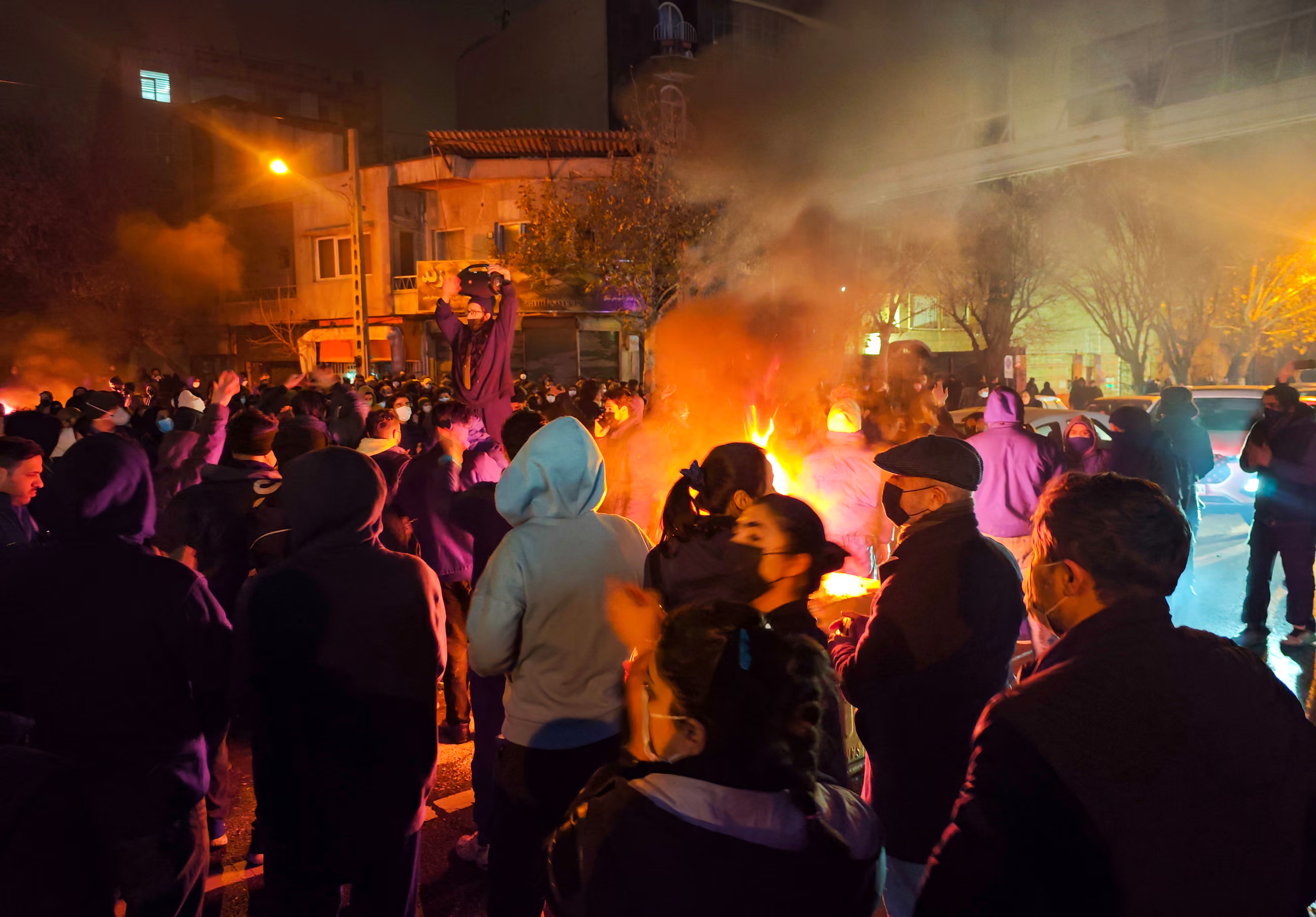 Jan 08 · Tehran
Fires are lit as protesters rally in Tehran on January 8.
Getty Images via The Guardian ↗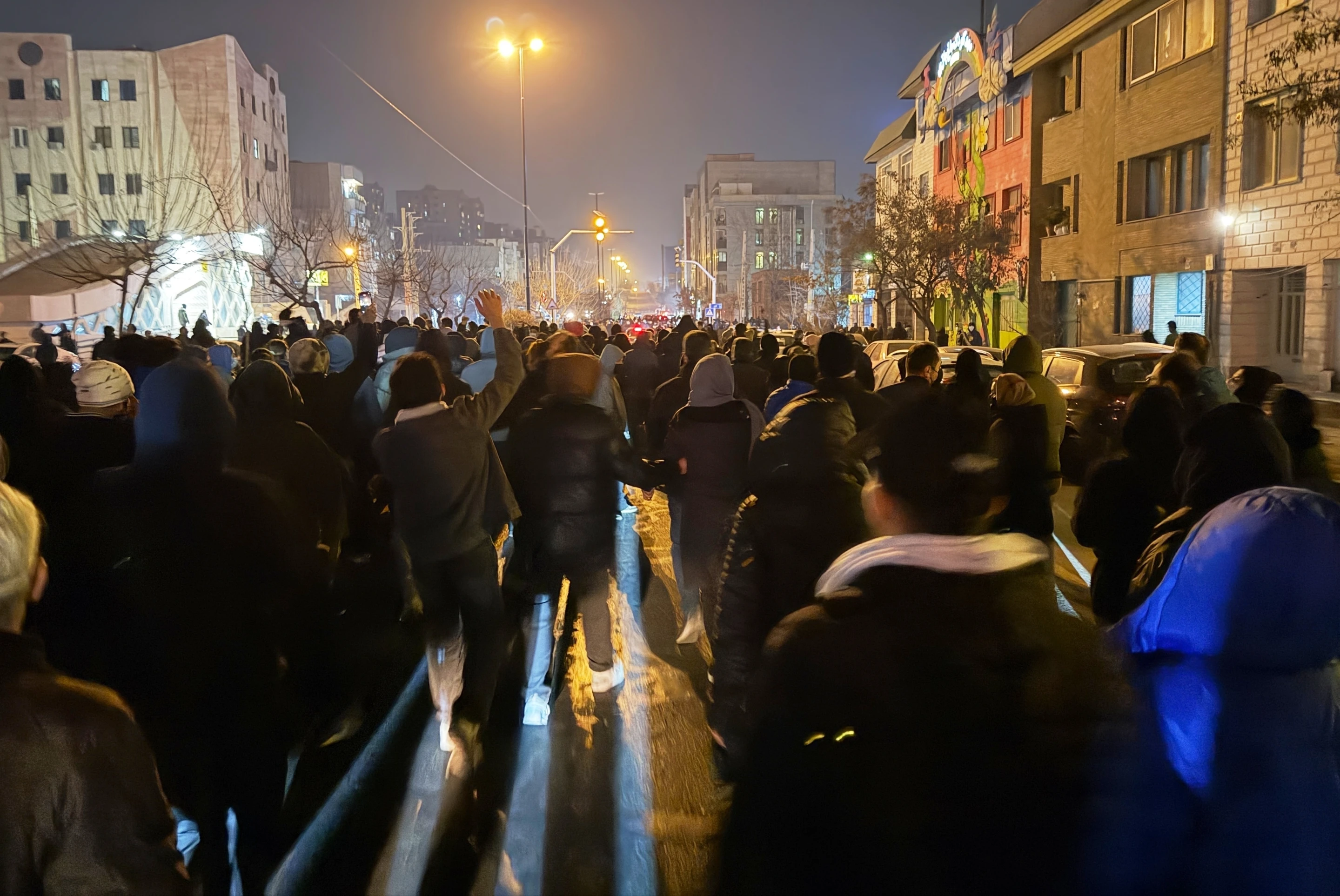 Jan 08 · Tehran
Iranians attend an anti-government protest in Tehran.
UGC via Associated Press ↗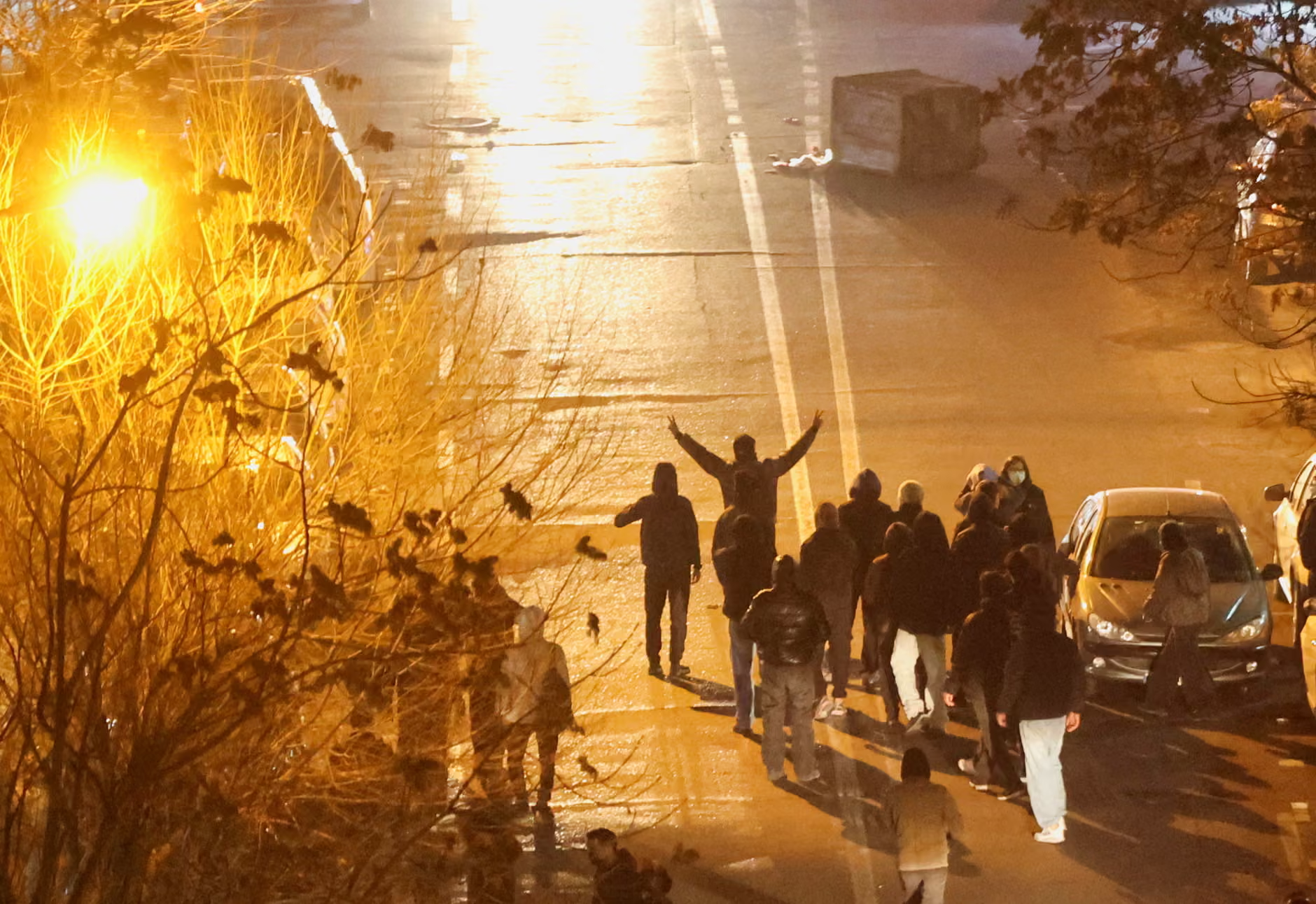 Jan 08 · Tehran
Demonstrators gather in a Tehran street during protests over the currency collapse.
Stringer / WANA / Reuters via The Guardian ↗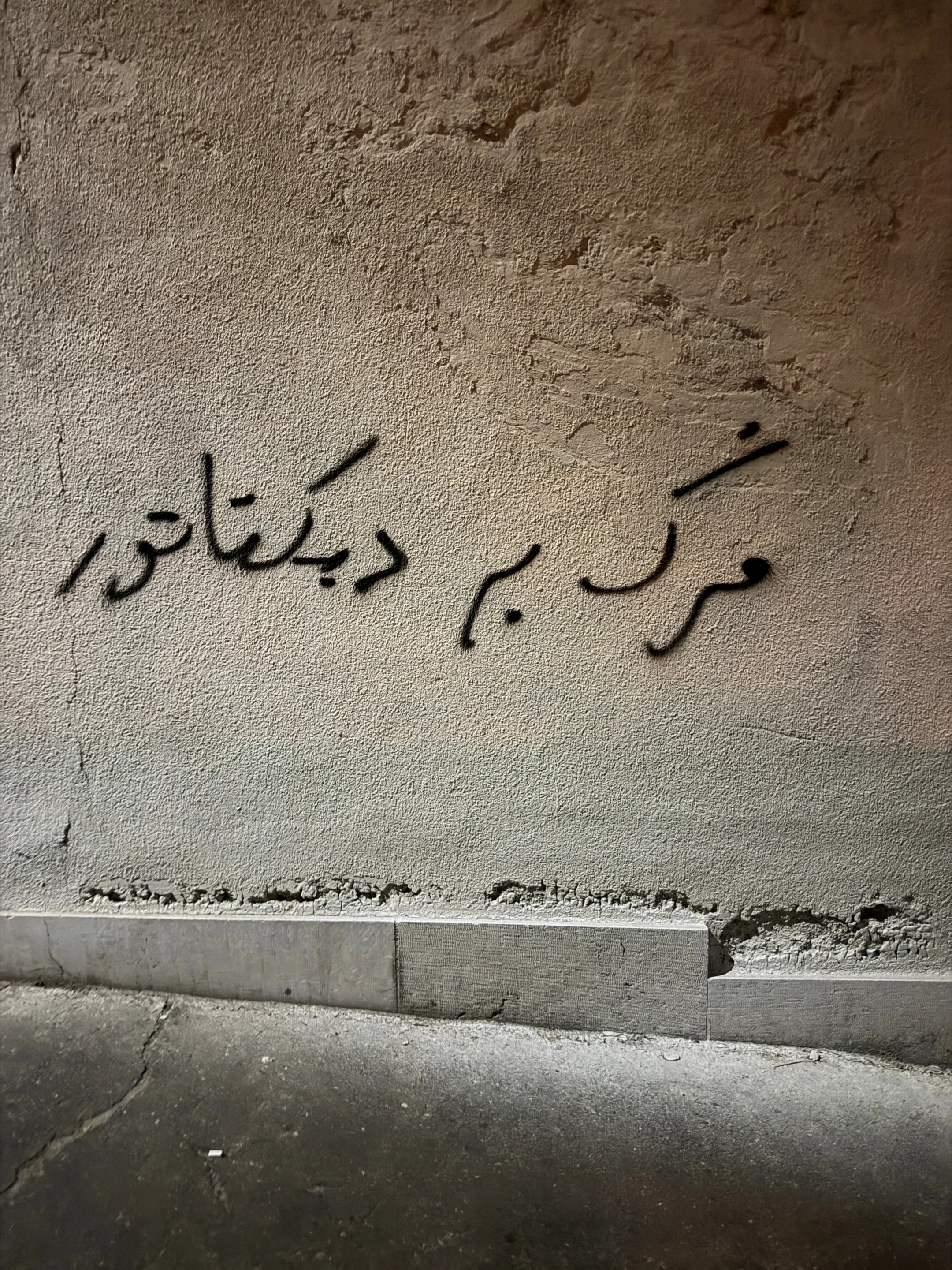 Jan 10 · Tehran
A wall reads “Death to dictator” during an anti-government protest.
UGC via Associated Press ↗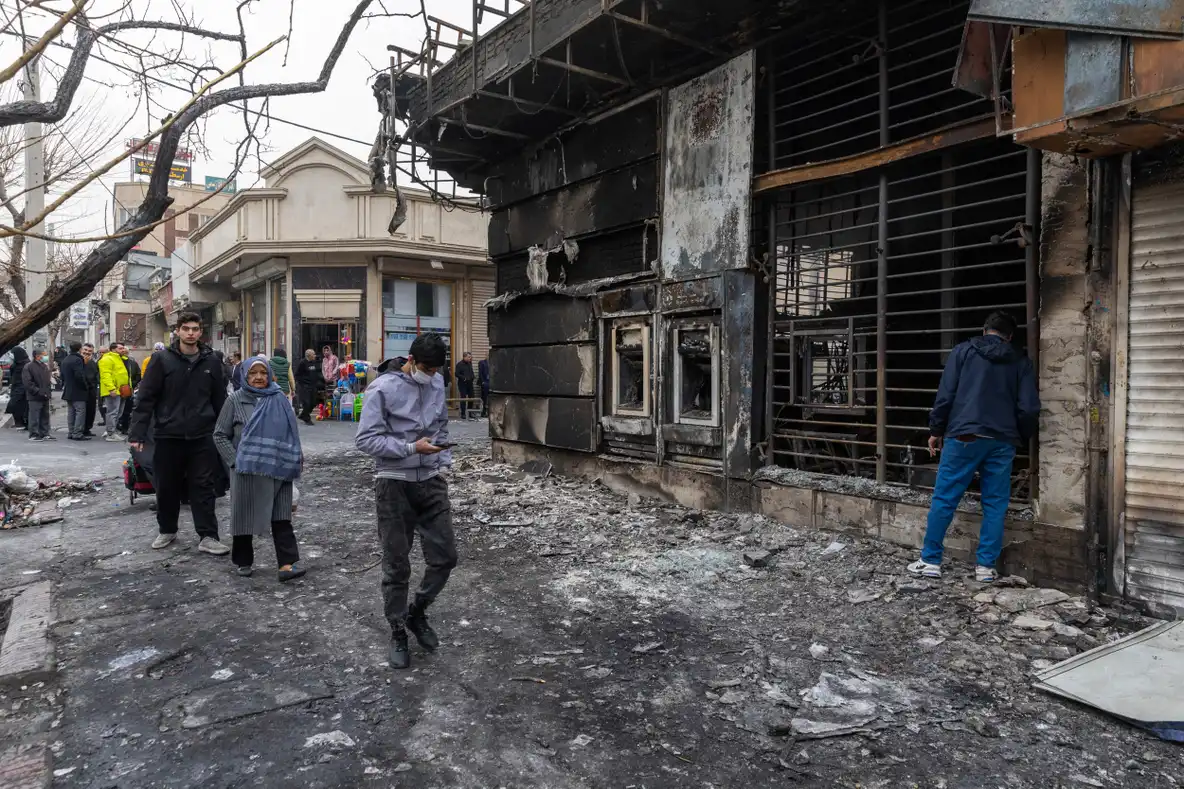 Jan 10 · Tehran
Pedestrians pass a burned-out building amid damage after the protests.
USA Today photo gallery ↗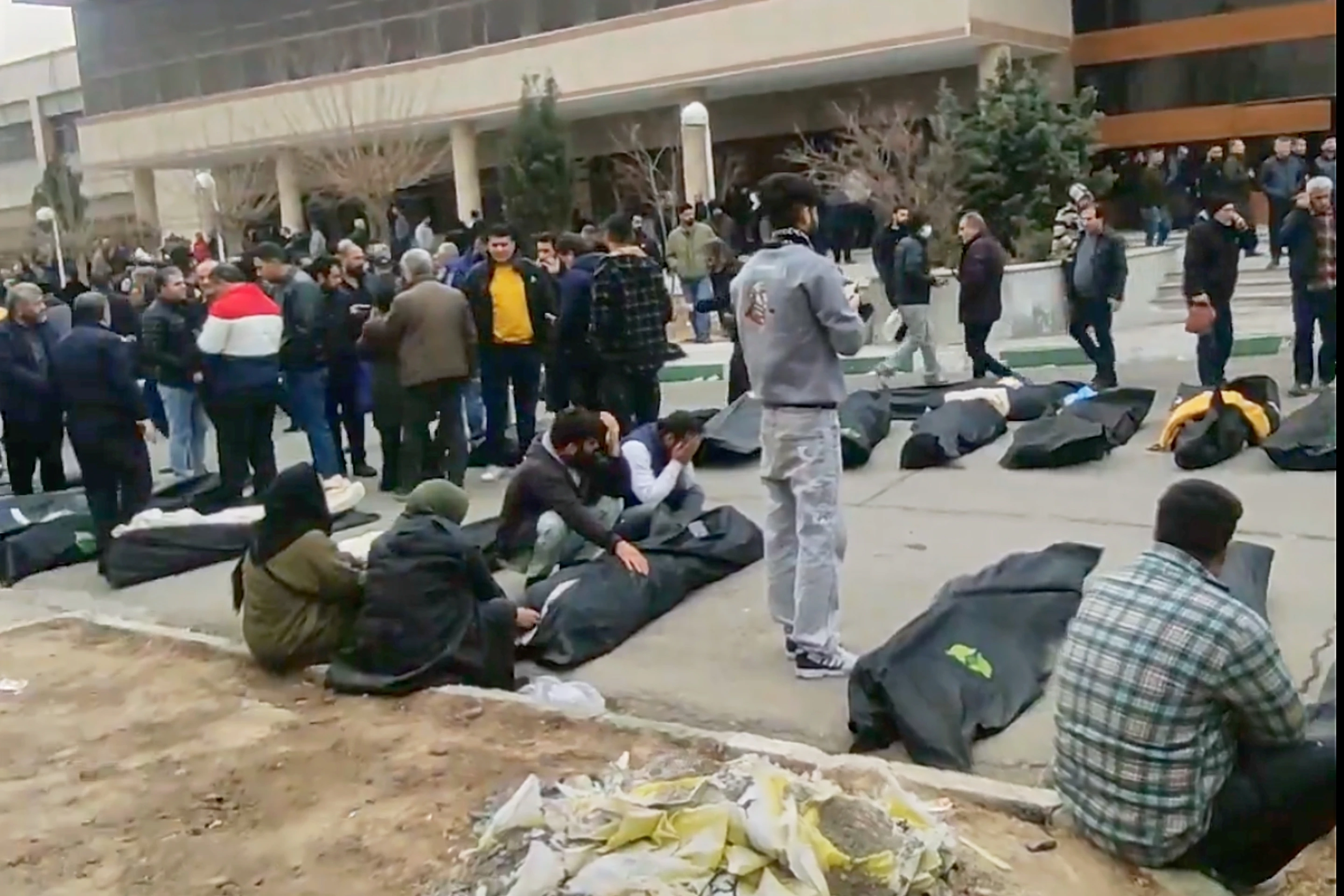 Jan 09–11 · Kahrizak
A video frame circulated as showing mourners and dozens of bodies at a morgue outside Tehran after the crackdown.
UGC via Associated Press ↗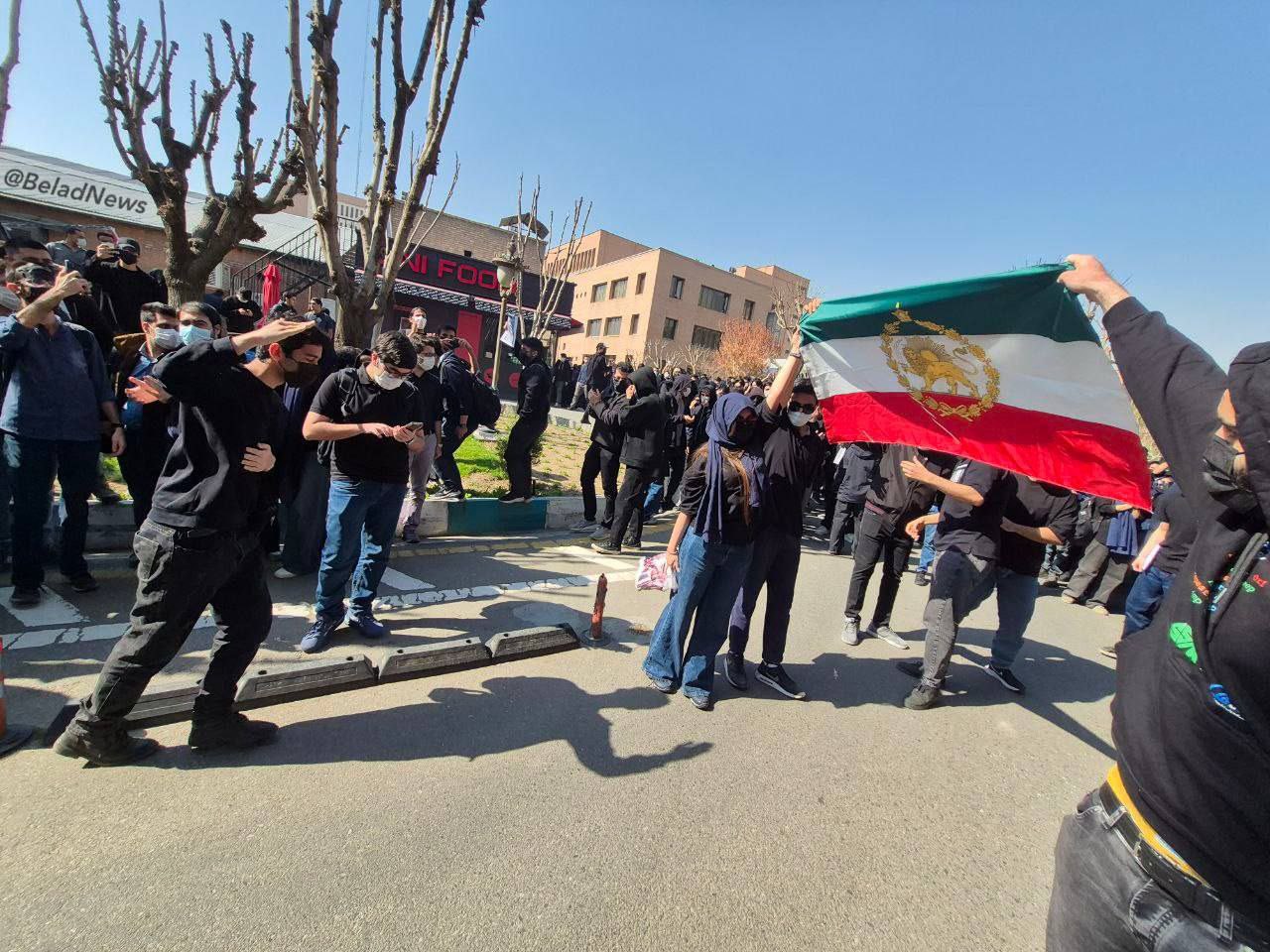 Feb 22 · Tehran
Students carry the Lion and Sun flag at Aria Mehr University of Technology weeks after the massacre.
@VahidOnline · CC0 via Wikimedia Commons ↗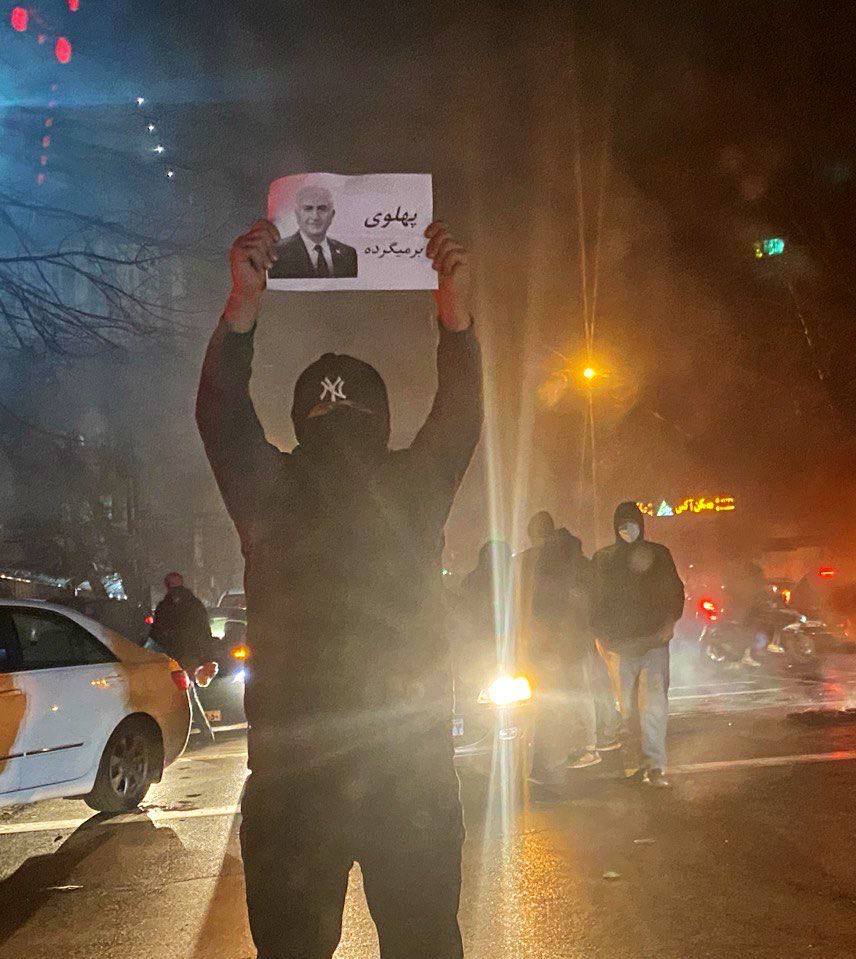 Date / location unverified
A masked demonstrator holds a portrait of Reza Pahlavi with a sign reading “Pahlavi will return.”
Submitted image · Photographer unknown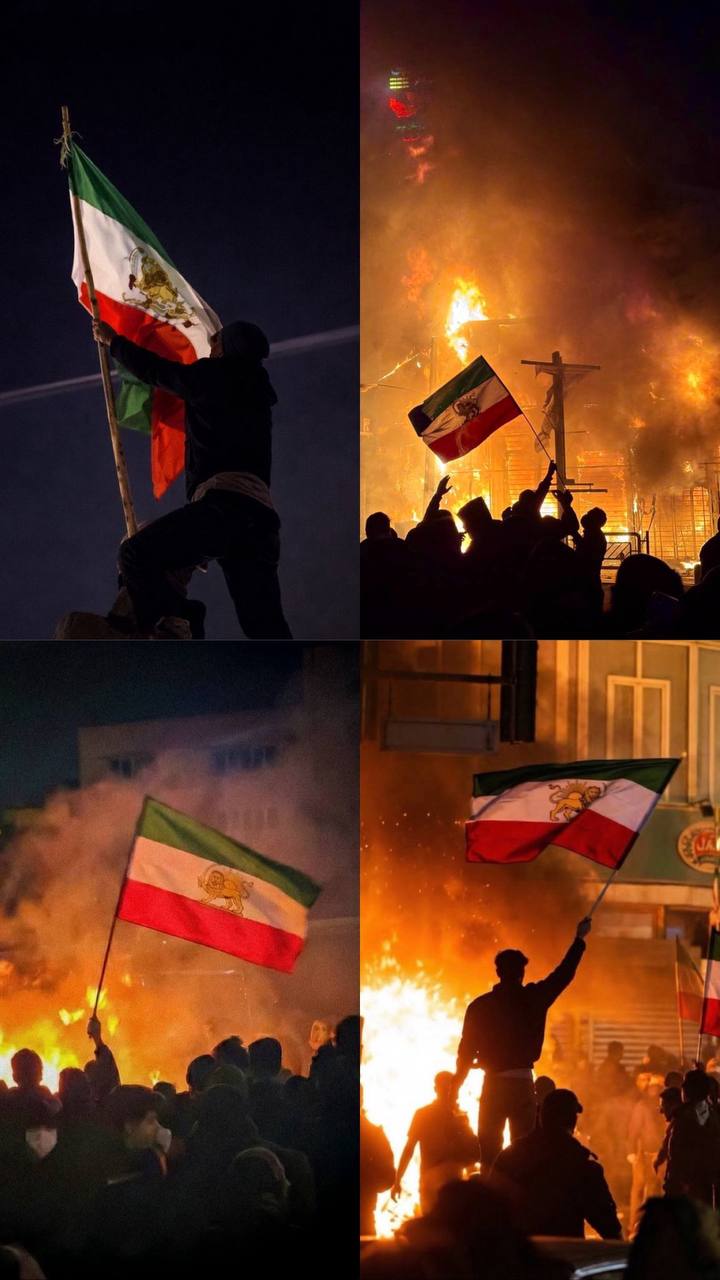 Date / location unverified
A four-image montage shows protesters raising Iran’s Lion and Sun flag amid fires at nighttime demonstrations.
Submitted montage · Photographers unknown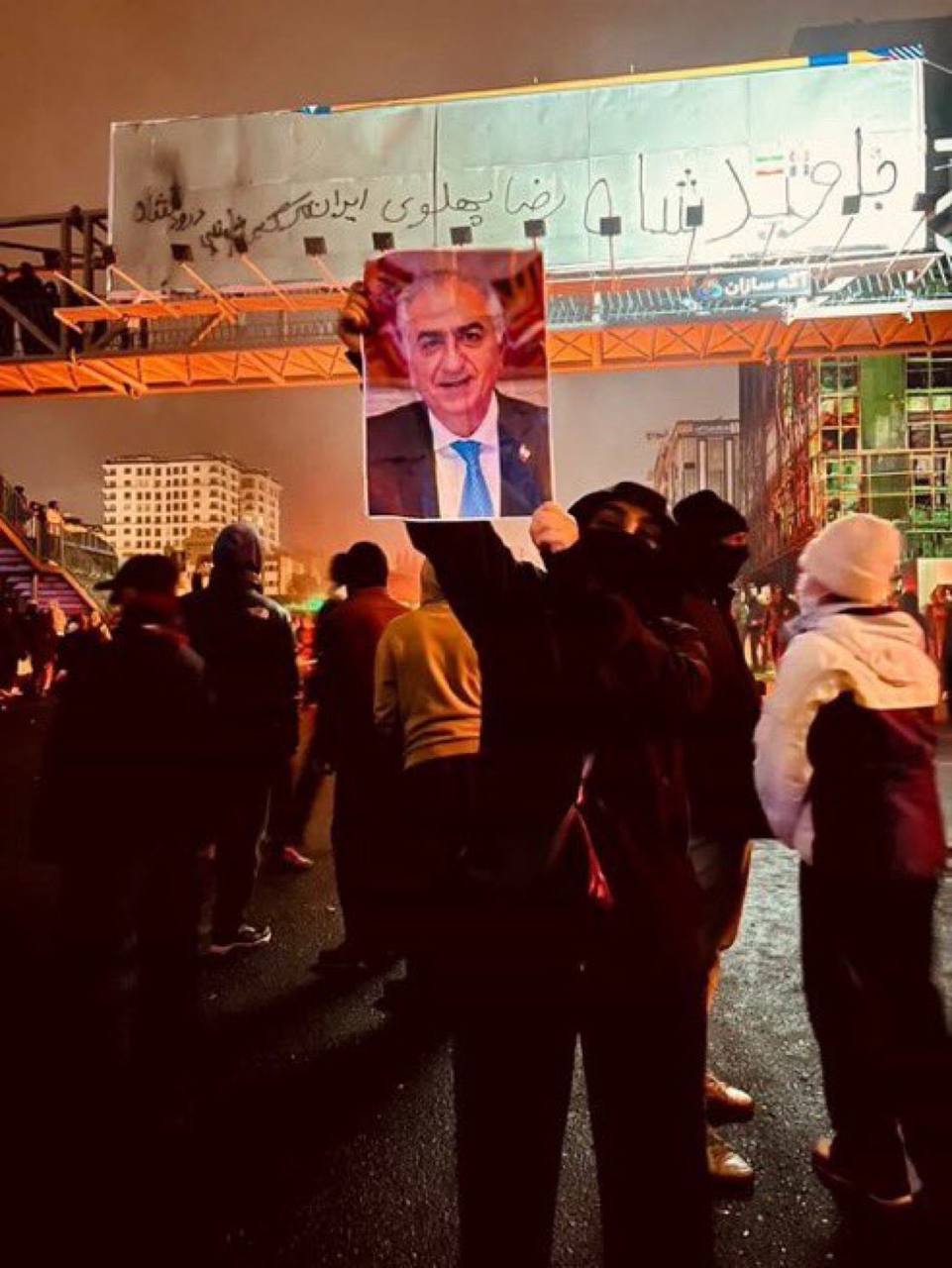 Date / location unverified
A demonstrator holds a portrait of Reza Pahlavi beneath pro-Pahlavi graffiti during a nighttime gathering.
Submitted image · Photographer unknown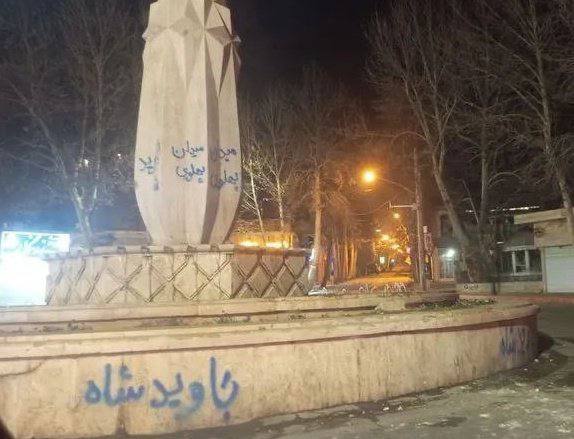 Date / location unverified
A monument is marked with the Persian slogan “Javid Shah” — “Long live the Shah.”
Submitted image · Photographer unknown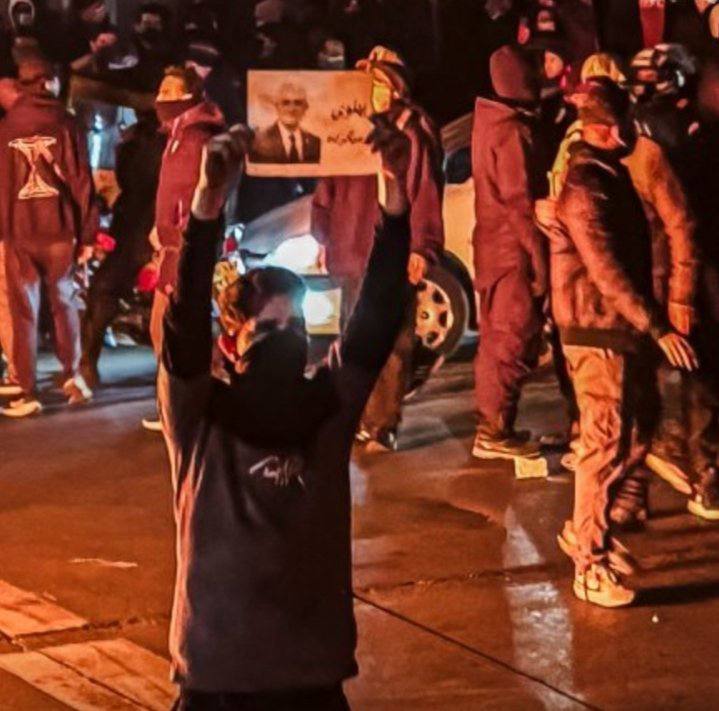 Date / location unverified
A masked demonstrator holds a portrait of Reza Pahlavi and a sign reading “Pahlavi will return” within a nighttime crowd.
Submitted image · Photographer unknown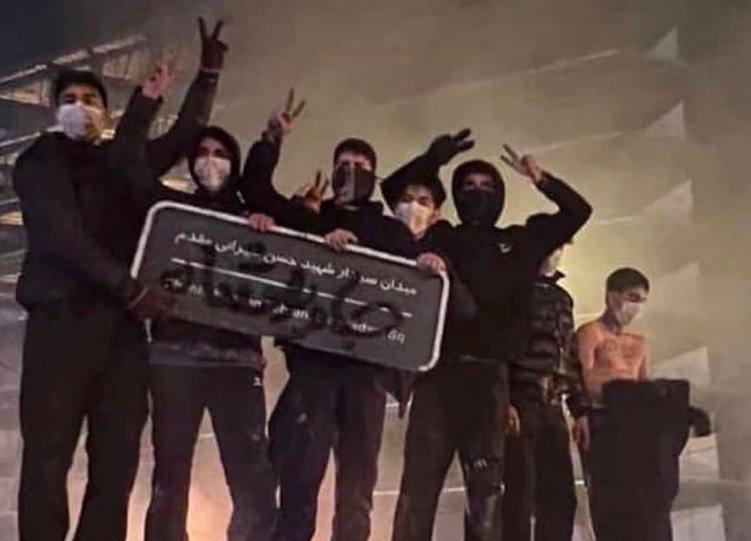 Date / location unverified
Masked protesters hold a Persian street sign and make victory signs amid smoke at a nighttime demonstration.
Submitted image · Photographer unknown08 / Evidence desk
Open the source material
Human Rights Watch · 16 Jan 2026
Open case file ↗Associated Press · 27 Feb 2026
Open case file ↗Amnesty International · Jan 2026
Open case file ↗Internet Society Pulse · 8 Jan 2026
Open case file ↗Human Rights Activists in Iran · Feb 2026
Open report PDF ↗UN Fact-Finding Mission · 2026
Open report PDF ↗09 / Source notes
Trace every claim
Numbers on this page are not presented as interchangeable. “Confirmed” refers to individually documented cases. “Under review” refers to reports awaiting that standard. Hospital-network estimates, accounts of unpublished state records and statements by political leaders are labeled as such. All figures may change as documentation continues.